
Digitax: The tax app making tax season simple for Ireland’s self-employed
When Corina Popov started filing tax returns for clients across Ireland, she kept noticing the same pattern. Self-employed people, many of them salon owners, beauticians, lash artists and stylists running busy chairs and busier diaries — were drowning in paperwork they didn’t fully understand, paying late-filing penalties they couldn’t afford, and missing reliefs they were entitled to claim. As a financial accountant and certified tax technician, she had the expertise to fix the problem one client at a time — but the queue kept growing.
So she built Digitax instead. And she didn’t do it alone.

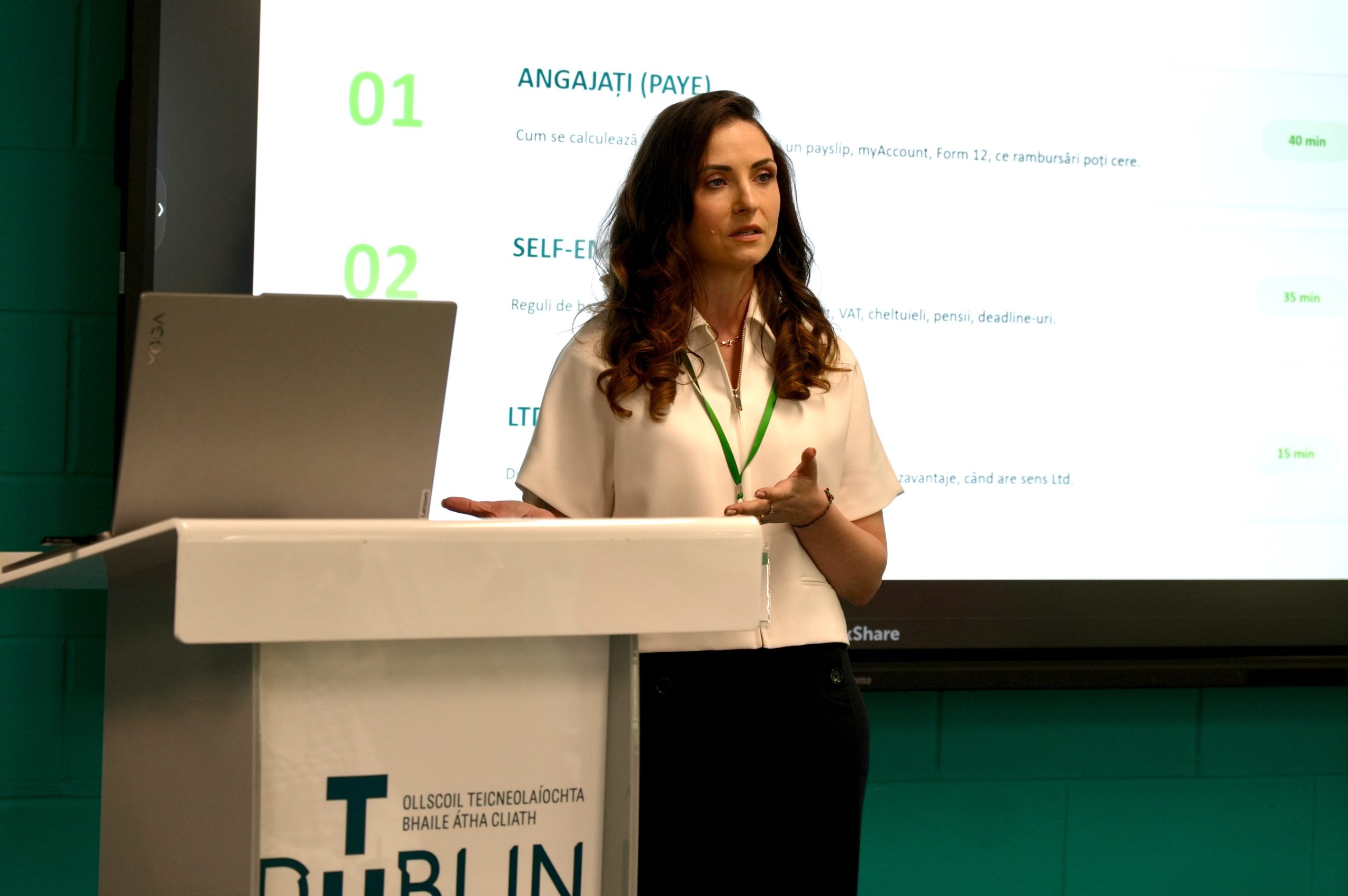
Corina Popov, Founder of Digitax
Digitax is a Dublin-based, Enterprise Ireland-backed tax-compliance SaaS platform founded by Corina and her husband Iuri Popov, a project manager who spent years at Microsoft before joining Corina full-time as co-founder and COO. Together, the husband-and-wife team have built the first app of its kind in Ireland — a genuine family business bringing the structure and polish of big tech to a problem that, for most self-employed people, has stayed stubbornly stuck in spreadsheets and shoeboxes.
“Most tax software is built by developers who have read the Revenue manuals once,” Corina says. “Digitax is built by a tax agent who files real returns every day — and a product team led by someone who knows how to ship software that actually works. That changes everything.”
Compliance is not just about the tax return
Tax compliance, Corina is quick to point out, is not just about filing a return at the end of the year. It is what you do every day before that. It is issuing valid invoices, keeping every receipt and document, and meeting every deadline along the way. A paper receipt left in a coat pocket is a missed deduction. Sloppy records and a late submission are a penalty letter from Revenue. Digitax is built around that daily reality, not just the once-a- year scramble.
The platform lets self-employed individuals and small businesses file their Form 11 income tax return, manage VAT and stay on top of their obligations from a phone. You can view an estimation of your tax liability as you go, no need to wait for an end-of-year €15k surprise.
Open banking connections sync income and expenses automatically — so a busy salon owner is not sitting up the night before the deadline trying to find a six-month-old supplier receipt. Invoices can be issued, records kept and deadlines tracked from the same app. And a live reporting dashboard gives full visibility on income, deductible expenses and tax owed, all from a phone.
Crucially, the technology does not stand alone. There are real people behind the tech. Every return that goes through Digitax is reviewed by a qualified tax professional before it is filed with Revenue — no black-box automation, no “submit and hope for the best.”
The software does the heavy lifting on data entry, validation and calculation; a human expert signs off before anything reaches Revenue. Digitax takes care of the entire compliance process. And that distinction matters more than ever. Revenue conducted 291,000 audits and compliance interventions in 2025 — and they are not stopping there. With new withholding-tax obligations for the self-employed on the way, the gap between casual record-keeping and proper compliance is about to get a lot more expensive. For a self-employed beautician or salon owner, an unexpected Revenue letter can turn a great month into a stressful one fast.
“Digitax means our clients are already ready,” Corina says. “The numbers are clean, the integrations are live, the deadlines are mapped, and there is a qualified professional behind every filing. That’s the whole point of building this — so the people serving clients all day don’t have to be tax experts at night.”
A paid subscription tier launched in May 2026, priced at €9.99 per month or €79 per year for full app access, alongside pay-as-you-go pricing on individual filings. The pricing is built to be affordable for sole traders, not pitched at big firms — because the people Digitax was built for are the ones running the chair, the salon and the small studio, not finance departments.
Ireland is just the start. With the domestic product live, Digitax is preparing to launch in the UK in 2027, with broader European expansion to follow — taking the same end-to-end compliance approach into markets where self-employed workers face the same daily paperwork problem.
For Corina and Iuri, this is more than a start-up. It is a family business with a clear mission. “I want a salon owner in Cork, a freelance lash tech in Galway, and a self-employed barber in Dublin to all open the same app and feel like the tax system finally makes sense,” Corina says. “If we get that right, everything else takes care of itself.”